
Conscious Conversations on Sustainability
By Ella Gallo
Throughout the Hudson Valley and across Marist’s Campus, local fashion designers, students, and community members are persistent in enduring conscious conversations to reflect and gauge a better understanding of what sustainability really looks like in the fashion industry. As the Hudson Valley serves as a centric outlet with an attention to detail for sustainably producing organic goods, cultivating raw materials, and supplying farmed produce, many locals have been wondering why can’t we demand the same for clothing?

Photographed l Benson Delaney ‘27
In response, Creative Directors from the Hudson Valley Sustainable Fashion Week (HVSFW) embraced the start of fall by hosting their fourth annual runway show, showcasing eight sustainably sensational designer collections that were handcrafted with intention. At the event, the HVSFW Team was joined by local designers, small business owners, and student volunteers for a dreamy runway show that celebrated sustainability across the fashion community, whilst serving as an entry point to reconsider our discussion about clothing.
Marist Sustainability Professor, Sonia Roy, believes that to begin nuanced conversations regarding the many components of sustainability, we must first start with proper education. Roy believes that in building a strong foundation rooted in genuine understanding and heightened awareness, we can take impactful first steps towards change in recognizing the fashion industry’s negative impact on the environment and our community. When the fashion community comes together to celebrate local and intentional artistry, an event like HVSFW offers a clear platform to better help navigate the many ways to approach circularity in the fashion industry.
Photographed l Benson Delaney ‘27
Both on campus and beyond the classroom, many students are urged to take sustainability into action by implementing personal changes into student lifestyle. Marist student and President of Ethical Fashion Initiative, Malena Russo ‘27, demonstrates that one of the simplest ways to begin living a sustainably conscious lifestyle is to reflect on your own personal shopping habits. Distinctively, Russo explains that a lot of the industry’s waste and excess stems from “shopping online, where a lot of our overconsumption habits are exploited because it is so easy.” By reflecting on our own personal routines and spending habits, Russo explains that we can combat excessive purchases through the realization that “we already have a lot of what we desire.” A key tip that Russo shares for other students looking to begin living a more sustainable lifestyle is to initiate the idea of “shopping in your own closet.” Looking at closet items that simply don’t get enough love and pairing them with different styles to be worn in unique ways, we can cut back on negative purchasing habits and circularly expand our own wardrobes. Russo states that the consistent need to fulfill exaggerated consumer wants stems from “seeing everyone else have it, which makes us think we need it.” In reality, we just might have everything we need. Professor Roy adds that we need to channel a restraint in our purchasing power to “retrain our brains,” as purchasing power “triggers something in our brain that allows us to feel rewarded when buying things because it makes us feel better.”

Photographed l Benson Delaney ‘27
Similarly, local designers from the Hudson Valley are actively reshaping their production processes by challenging learnt behavior with a new approach that puts sustainability at the forefront of their design direction.
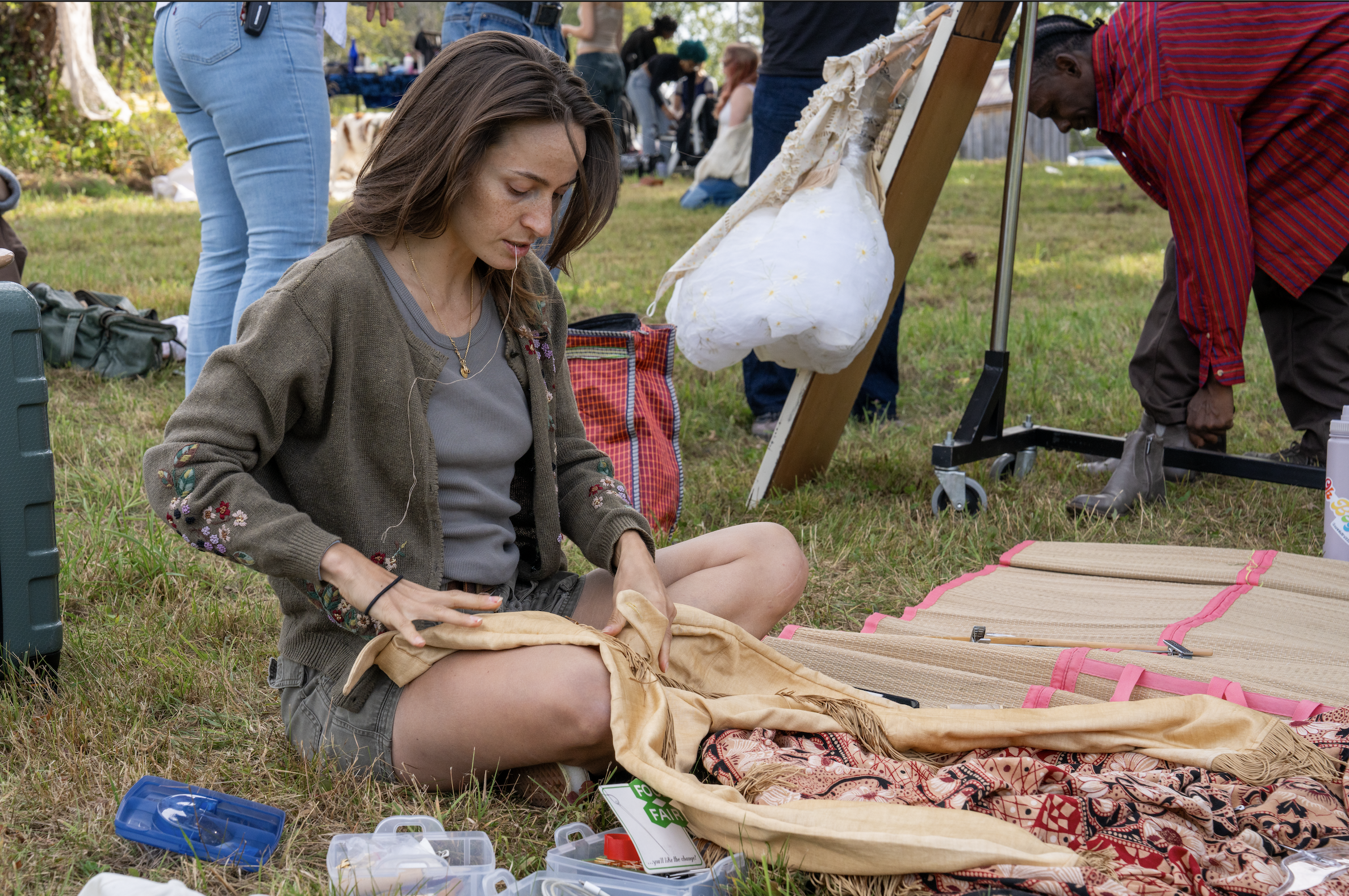
Marist graduate, Meg Knudsen ‘25, believes that a key component to tackling sustainability is to rethink the order in which we create our garments. In nurturing their serene bridal collection, Knudsen determined that aside from an academic setting, they have reworked the steps within their creative process to produce a garment. Rather than drafting patterns and creating sketches to then find materials, Knudsen “allows the materials I have found dictate what it becomes.” Demonstrating that in a reconstructed creative process, it is okay to break away from doing things in a specific learned order. Knudsen continues by saying that there is no need to “monetize passion” in this industry; designers can aim to find all their materials first and become fully inspired by the textiles. By choosing not to extensively source materials for specific creations, designers can release their full creativity in a way that is non-wasteful and is inspired by their findings.
Photographed l Benson Delaney ‘27
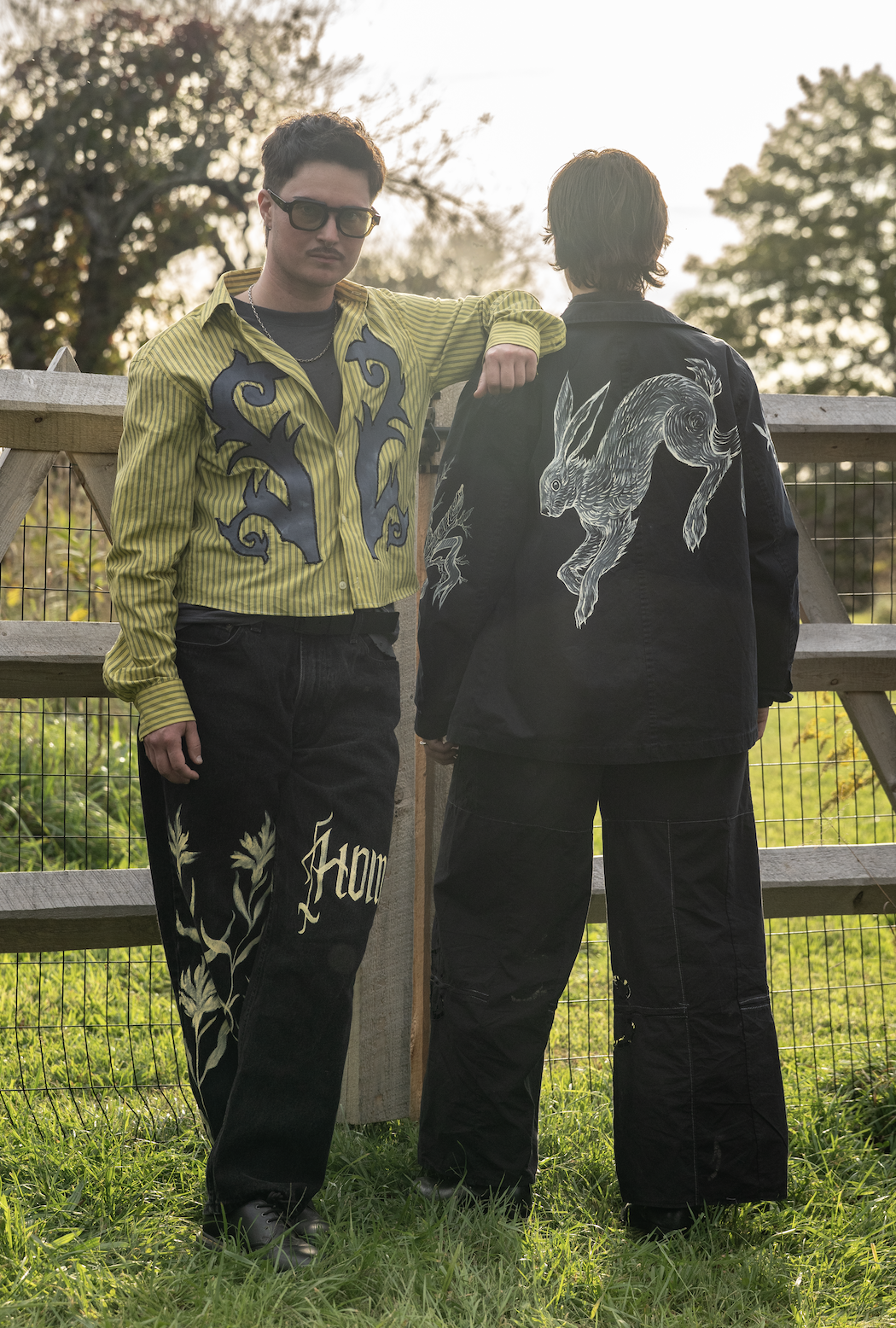
Looking at designer collections produced in HVSFW, other aspects that can redefine sustainable product creation are the techniques implemented to better amplify garment longevity. Both in the garment’s trend orientation and construction, an immense consideration when tackling sustainable garment creation is time. Which classic garment construction techniques can be utilized to ensure the quality of this garment to withstand the test of time? Which silhouettes can be fashioned using this fabric to remain timeless? How can this garment be made to be worn again down the line? HVSFW Designer, Jocelyn Siegmann, aimed to curate a collection meant to “grow with your body by still fitting you throughout your life’s changes.” In her collection, Siegmann featured several dresses that were made with “classic garment techniques” like “interior binding” to ensure the longevity of the garment while also honoring an art form that has been lost through fast fashion. By mastering her techniques and gathering inspiration from different eras of garment construction, Siegmann has dedicated her collection to meticulously creating zero-waste garments that have “ignited a creativity within me that I thought I had lost in corporate fashion.” Throughout Siegmann’s collection, the designer featured adjustable elements and cinching techniques to provide a range of comfort and growth, made to last the test of time, rather than the production line.
During any conversations concerning sustainability, whether it be environmental or socioeconomic-centric, it would be impossible to ignore the ethics bound to the subject. When reviewing the relationship between consumer and product consumption, it is important to be aware of the industry processes that allow shopping to continue at accessible to low price points. In several conversations surrounding the idea of navigating shopping platforms with intention, Russo explained her biggest frustrations lie with large corporations labeling their items as “handmade.” Russo explains, “there is no machine on planet Earth that can create a garment from gathering fibers, weaving, to cut and sew, and then onto the sales floor.” Furthering the discussion about corporate frustrations, Russo indicates the importance of realizing that absolutely everything we touch as a consumer is handmade, “there are hands on everything you’re wearing and everywhere you are shopping.” It is simply the difference in human sustainability, regulated conditions, and labor laws that indicate the difference between being handmade for an event like HVSFW or for a fast fashion company. Russo states that it is “much deeper than an $8 top, because who is really at cost for that?”

Photographed l Benson Delaney ‘27
When asked about the future of sustainability, Professor Roy explained that coming together as a fashion community for the goal of living more sustainably can lead to a large and lasting impact. Roy further demonstrates that as a fashion community “we’re not always together pushing in the same direction,” stating, “the solution for pollution that fashion causes already exists, people just aren’t applying it.”
Roy notes that substitutions for many of the processes in the apparel supply chain that are harmful to our environment, are readily available and can be used in place of our outdated and harmful routines. Roy believes that the cause for resistance within the fashion industry that continues to halt progressive change, stems from “people getting overwhelmed when there is so much that is wrong, that it stops people from doing anything at all.” Especially in such a fast-paced industry with several moving parts, Roy sympathizes that “it is a mistake to try to tackle everything, because you shouldn’t let the need to be perfect become the enemy of doing good.” Roy concludes that because the industry is so vast, to move forward with a sustainable approach, each individualized sector of the industry would need to be fully invested in reworking the ways in which we handle the supply chain. Thus, to launch sustainability as an action rather than an initiative, the industry would need to rebuild the ways in which we produce, create, and harvest garments.

Photographed l Benson Delaney ‘27
As much as sustainability is a concern across the fashion industry, the industry is nothing without its consumers. For just one day at HVSFW, students, community members and runway attendees were exposed to a glimpse of what the future could hold — harmony between fashion and nature. The power of individualized sustainable fashion in action doesn’t just need to be a dream. If every person makes a conscious effort towards sustainability starting in their own closets and shopping habits, the whole system will turn into a solution. It starts with you.
