
Unraveling: Measure: Born Into Silhouette
By Lauren Uliana
Photographed l Cecilia Potter
Interview with Fashion Director Libby Hale Clark
Can you break down the process of planning this shoot and video?
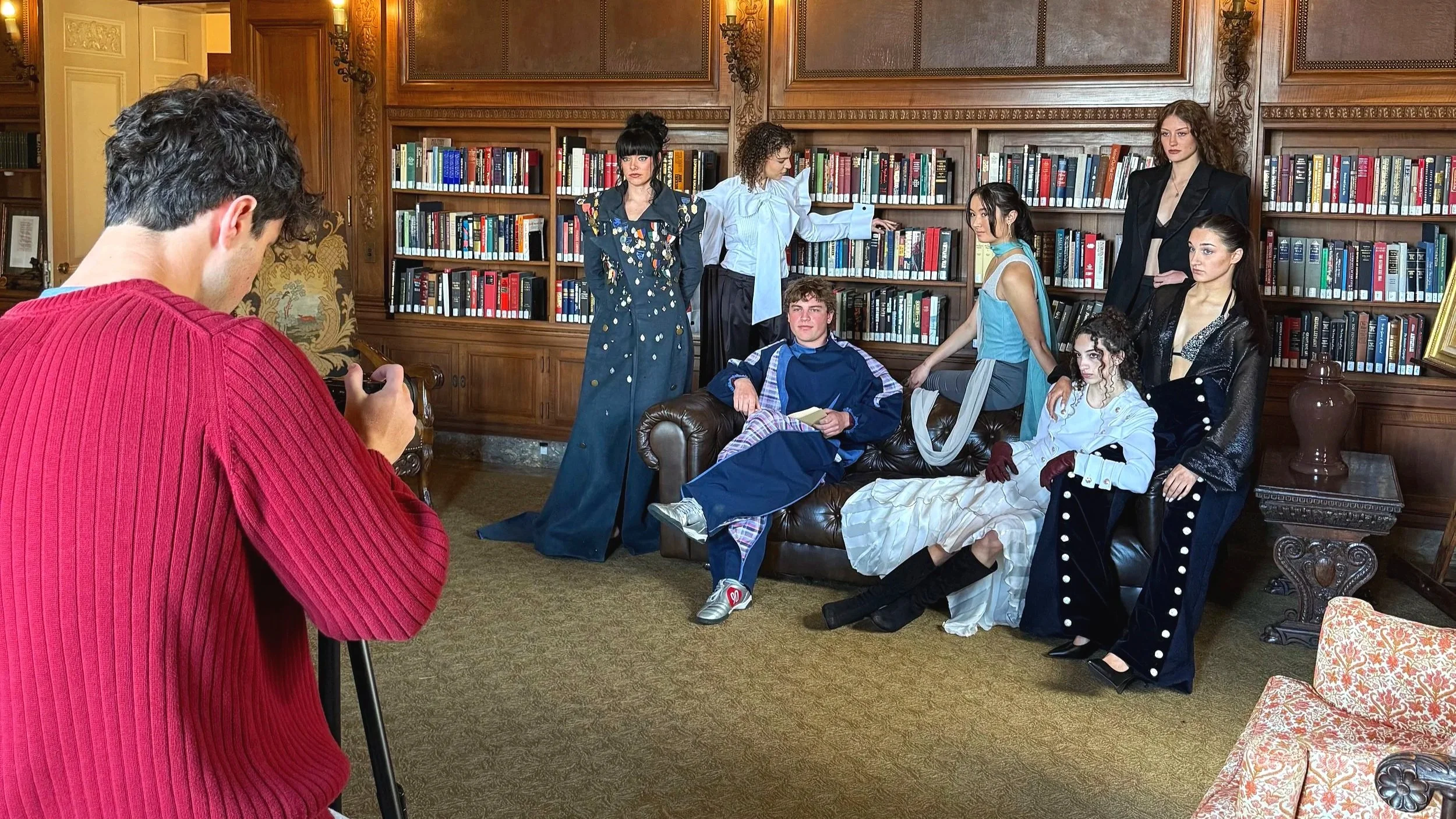
LC: People think photoshoots are all about creativity, but there’s so much planning that goes into it, and for Measure, that process actually starts way earlier than people expect. It really goes all the way back to fall 2025, when Sam and I were given our roles as Fashion Directors. In December, we went to the muslin fitting where the seniors showed the first “draft” of their final collections. Over winter break, we started organizing all 32 designers into smaller, cohesive groups of about five or six, based on how their collections felt visually together, and then built concepts around that. In the spring, once our teams were set, we finalized the photoshoot concepts. We planned nine shoots total, seven with senior designers and two with juniors. For this specific shoot, we chose Payne Mansion as the location and worked out all the scheduling and logistics around it. From there, we cast models and reached out to them, then sent their measurements to the designers to make sure everything would fit properly. We also created detailed direction for hair, makeup, and styling for each look, and put together a full shot list with specific poses, angles, and moments we wanted to capture. We then met with our photographer, Dan Shea, and walked him through the vision so we were all aligned on how the shoot should look and feel. After that, we ordered props and made sure all the accessories were secured ahead of time so everything was ready going into the shoot. The final step is making sure everyone knows exactly when and where they need to be, so detailed call sheets are sent out breaking down the entire schedule hour by hour. Most of our shoots have around 5–8 models and take about 3–5 hours to shoot, including both photo and video.
Where did the inspiration come from for the theme?
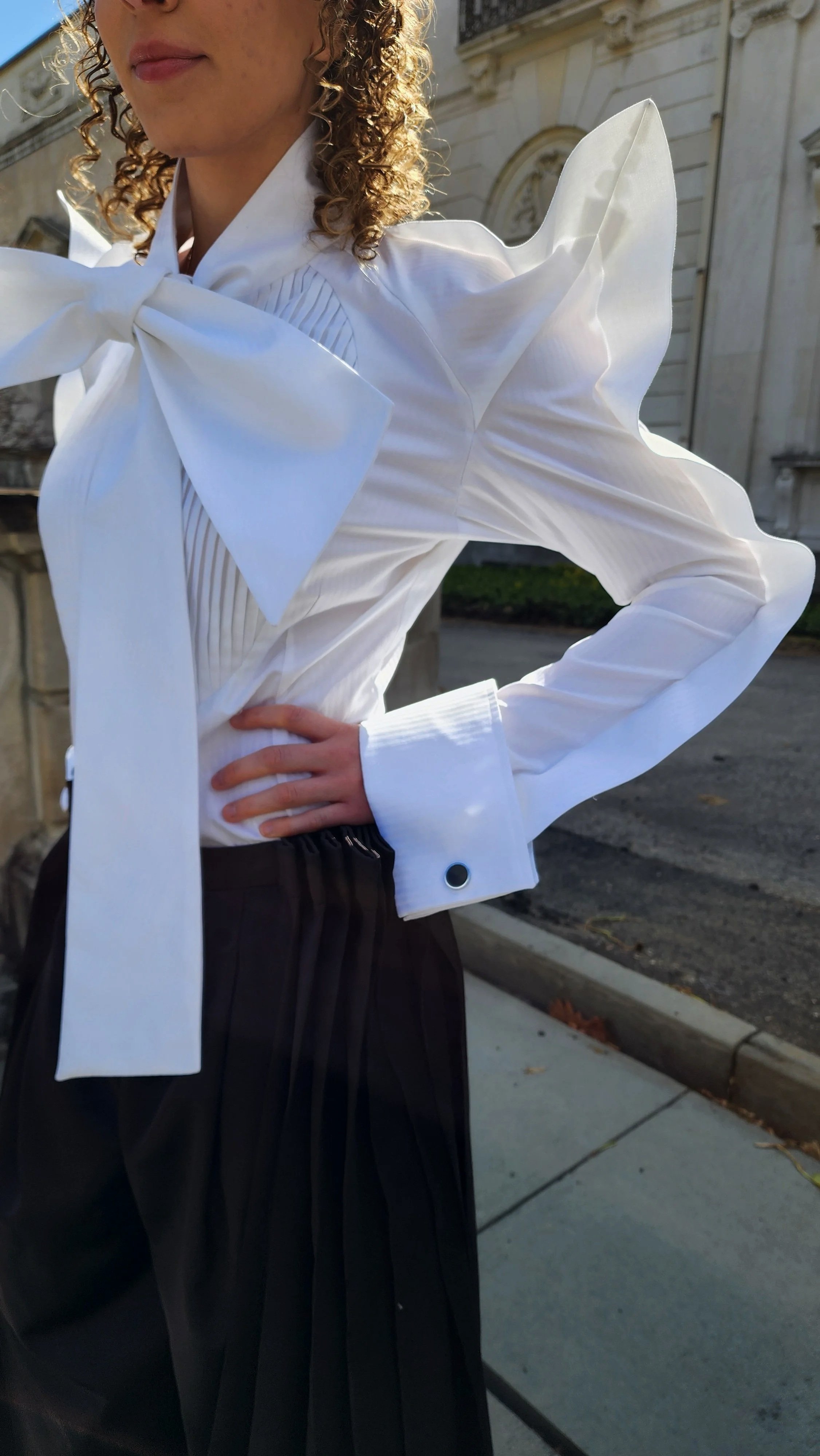
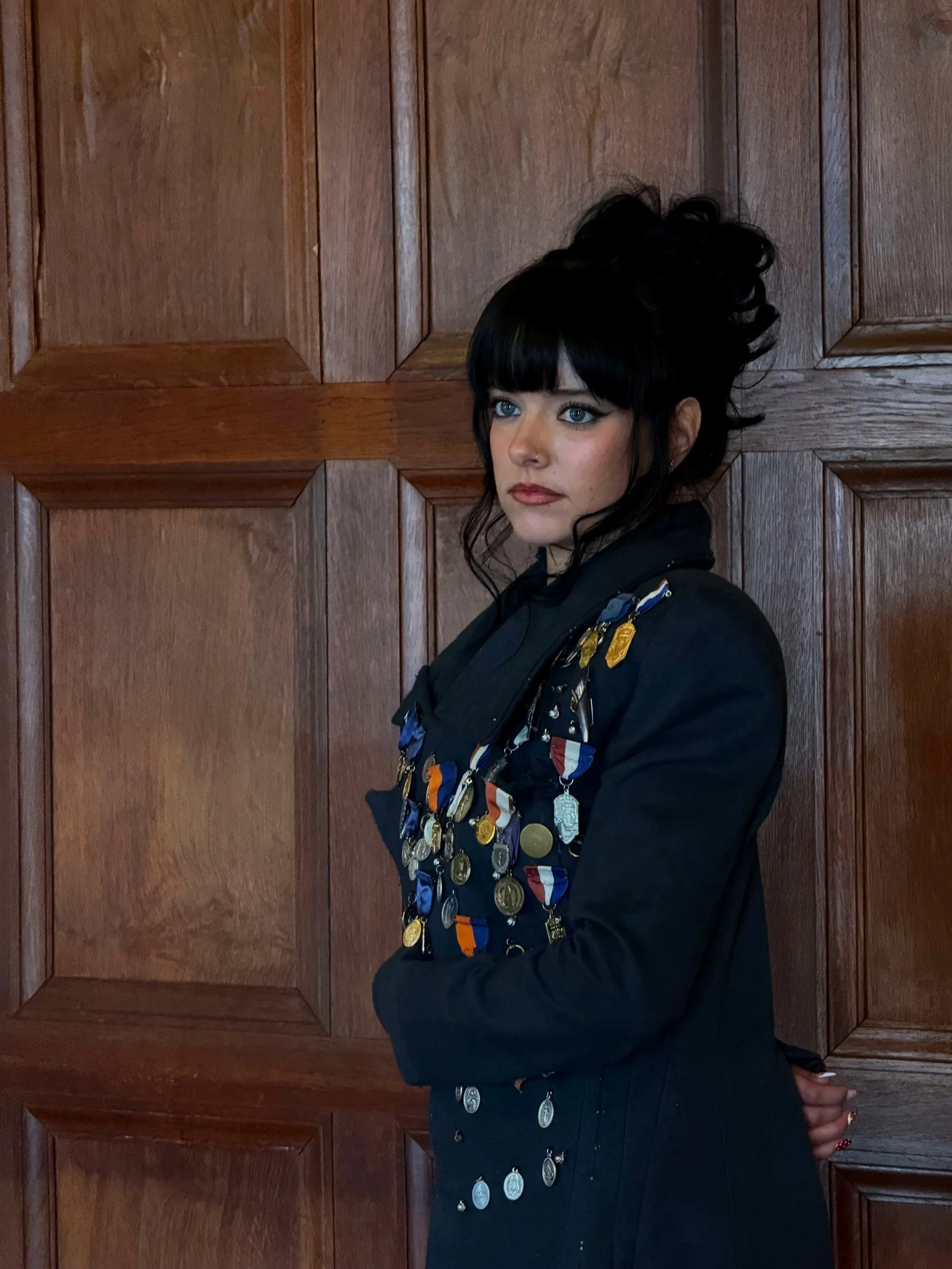
LC: The theme Born into the Silhouette came from this idea that identity and legacy are something you inherit, you’re stepping into something that already exists before you shape it yourself. A silhouette is already there, and you grow into it, which is where the name comes from. A lot of the inspiration also came from Payne Mansion. It’s such a beautiful, historic space, and the collections naturally fit that atmosphere. That led us to think about the kinds of people who would live in a place like that and the legacy they leave behind.
How were you guys able to determine which designers belonged within this theme?
LC: For this shoot, we grouped these designers together because their collections all had this really strong sense of luxury and timelessness. There was something about the way they used silhouettes, fabrics, and detailing that felt very elevated and classic, which aligned naturally with the theme. It also worked perfectly with the setting at Payne Mansion. The space has that same historic, refined feel, so the designs didn’t feel out of place at all, they actually felt like they belonged there. You can really picture the models existing in that environment, which helped bring the whole concept to life.
Photographed I Bradley Erikson and Cecilia Potter
What is the storyline of the video?
LC: The storyline of the video follows a similar narrative to the photoshoot, but it’s a bit more focused on movement and interaction within the space. It centers on the idea that the mansion itself is almost like a living entity, it “remembers” the people inside it and the relationships between them. Throughout the video, you see the models moving through the space and subtly interacting with one another. By the end, it builds toward a final, composed portrait scene, where everything comes together into this family-like photo. It’s meant to feel like the space gathered them and preserved them in a single, timeless moment.
This is the exact concept we sent to our videographer Dan Shea:
“Laura’s model opens the front door. Slow dolly backward as she steps in, taking in the space. She sets down her bag and hangs her coat on the rack. She looks down the hallway, as if sensing others arriving. Each model enters a different room, one by one, as if drawn to specific spaces: Caroline’s model slips into the library, fingers brushing the spines of books. Rainerio’s model enters and stands near the mantel, warming her hands by the fire. She glances over her shoulder, sensing someone else in the house. Erin’s model rises slowly from the sofa, the camera following her upward movement. Oskar’s model stands from a chair, smoothing her jacket. The models begin crossing paths, not fully meeting yet. Two models pass each other on the staircase, brushing shoulders without speaking. Two models walk side by side in the courtyard, not talking, just sharing the space. All models drift into the same room, naturally forming a loose cluster. They settle into positions — some standing, some sitting — like a family portrait forming itself. A slow zoom out from the group”
What was the energy on set?
LC: There’s really no other feeling like being on the set of a photoshoot. Our team spent weeks and weeks planning this shoot, so seeing it come to life exactly how we envisioned it is incredibly rewarding. At the same time, you’re surrounded by garments that someone spent so long conceptualizing and making, and you get to help bring that vision into a real, physical space. It makes you feel really lucky to be part of that process. Being in a room full of other creative people—the photographers, makeup artists, models, and everyone else—who are all working toward the same goal is what makes it so special. It’s hard to fully describe, but the energy on set is just really inspiring.
